
C. Evans Mylonas, “Hot Nights,” Photography, 2023
For Betsy
Cooper Lyon
August of 2014 was a strange month of my life. At nineteen, I had recently moved into my first home in my maternal homeland of Tucson, Arizona. Four generations of Bret Hartes preceded me, and there I was, recently disavowed of any parental restrictions, the wind of nescient youth at my back, ready to make a life for myself. I had recently gotten my first job at a local plant shop whose trademark “Weird Plants” sign had pulled me in. I resonated deeply with the strange lifeforms found therein, whose strangeness mirrored my own. Perhaps they also felt a similar sort of isolation and loneliness in their four-inch plastic nursery pots. I found a home in caring for these black sheep of life’s seemingly infinite iterations.
In the first week of August that year, I was summoned back to my hometown of Phoenix by my family to celebrate my mom’s birthday early–it just so happened that her mother, all of her siblings, and all three of her children were in town, and my uncle Jim, her elder brother, had planned for the occasion. I had been too scared to learn how to drive in high school, so I caught a ride with my uncle Jefe, my mother’s younger brother. The baby of the group, Jefe was born a whole eleven years after my mom, the next youngest. He is a bit of a burly man, tough and worn from his years outdoors rock climbing, tattoos covering nearly every part of his body, and a big bushy beard underneath which he hid his teddy bear heart and a soulful, reflective nature. When I was young, he was my favorite uncle, the guy who joked around and was always putting me and my older brother Oliver on to great music. Over the years, we grew somewhat distant, as one does with their family members during the rocky terrain of adolescence. However, we formed a unique bond during the frequent weekend trips we took to Phoenix that year. He drove an ugly box-shaped car that had the stench of a thousand hand rolled cigarettes, and whose radio was inadvertently stuck on the local pop-country station, much to my discontent. We came up with a game to pass the time, listening for the first song to lack casual remarks about alcoholism–one that neither of us had won to that date. Driving the I-10 to Phoenix took about 100 minutes. We spoke little but laughed every time the chorus went, “And I’ll drink a beer…” It was 100 minutes of much needed, lighthearted silence before the walls of the city came closing in on us and reality reared its head with its soul-melting gaze.
Every time we entered Phoenix, I felt like Icarus, the wings of my nascent freedom melting me back down to the sea that was my hometown. I had left in a hurry at seventeen, electing to finish high school online at my cousin’s house in Oceanside. But here I was, back again to see my family. As I stepped through the threshold of that familiar house with its creaky wooden floors and small, 1940s charm, I was greeted by the sound of music and the smell of cooking.
Everyone really was in town. Oliver had left Tucson a week earlier to visit old friends in Phoenix. With four-and-a-half years between us, I had always been the pesky younger brother, chasing acceptance into the circles of friendship of the older, much cooler kids. We had recently gotten a house together–one that my father bought and intended to fix up and rent, setting up a steady stream of income so that he could retire comfortably. Oliver was a rare sight throughout my high school years, spending most of his time finding himself in the misfit edges of society, hopping freight trains with all manner of rejected youths. My sister Elyse had come all the way from her home in Vietnam, where she had fled after college to take up teaching English and form her identity as her own woman out of the broad shadow cast by the matrons of our family. My grandmother, Dianne (to whom we had always lovingly referred to as Donnie), was an enigmatic woman, to say the least–a mother of four with deep roots to Tucson. She had been rodeo queen in 1948 at age sixteen, and soon thereafter had kids, raising them mostly on her own.
I think the standards and expectations of fathers in those days were ones of silence. A man was to earn money for the house and bear the brunt of life’s complications in silence–how could any issue those young men faced be traumatic or worthy of compassionate vulnerability, at least compared to their fathers, many of whom had either died in the war or gone through life-shatteringly traumatic experiences. As psychology was a burgeoning field in that day, they even had to make a new classification for what exactly these men would experience when returning to normal lives. “Shell Shock” was now Post-Traumatic Stress Disorder. My mom never talked much about my grandfather; the sole mental portrait I had of him was a man drowning in the responsibilities of a judge in Tucson’s court system. I think Jefe was my grandparents’ last-ditch effort to make things work before he ran away, consumed by his addictions. My mom told me the last time she saw him, he had come to my parent’s house in Tucson when they were still young. He was drunk and rambling before driving off on a motorcycle.
Thus, my family was guided by strong and wonderful women. Donnie was the exuberant matriarch, to be followed by her two daughters, Besty and Kitt. Kitt, my mother’s elder sister, also greeted me. She had been a fixture throughout my teens, living with my grandmother in Tucson. My mom and I would visit often. Kitt was always a loving presence. She had modeled to me that my introversion was nothing to be ashamed of. She didn’t talk much, but always had love to share, especially in the form of cooking. She and her ex-husband had owned quite a renowned Italian restaurant once upon a time in Milwaukee. She once found out I was not eating well due to my struggles with depression and showed up to my house with two large reusable grocery bags full of various oils, seasonings, and produce, letting herself in and saying, “I heard you like risotto–I’ll teach you how to make it!” Then there was Jim, my mother’s eldest brother, and first child of Dianne. Jim was always a planner–putting together this unlikely gathering of all the Bret Hartes, all crammed into my mother and her wife’s roughly 1,100 square foot house. I can’t say my relationship with Jim had always been necessarily a friendly one. He was an outspokenly faithful and straight-laced business man, and I was an angry teenager whose modus operandi was to become the antithesis of this form that both Jim and my father had so modeled throughout my youth. In later years, however, I would find an unlikely wisdom and caring in Jim.
We had all gathered here to celebrate the life of the woman who I owed my existence to. Betsy, my mother, was turning fifty-five that year, and we were all there to make it truly special. However, we met somewhat early for the date, as there was fear that we might not all get to be present for the twenty-ninth. My naivety would not brace me for the fact that this had been organized not due to any scheduling conflicts, but because my mother was, in fact, dying. Two years prior, I had been made aware of her illness, fourth stage adenocarcinoma.
To a seventeen-year-old, those words didn’t mean much. Maybe a serious and scary illness to fight, but not one that would so thoroughly alter the course of my life as to rob me of everything I was and cared for. Even through the hair loss, the brain surgery, the final months of pleading for any sort of intervention that would cure her, I believed that she would make it. She had to, right? Nineteen was far too young to lose a parent. That was a grown-up problem. Certainly not one I would be subject to here and now. So, perhaps to her relief, this was nothing more than a big family party for my mother who had been struggling so much in the years prior.
It was nice to see everyone crammed into the tiny house. Words of solemn love covered the kitchen walls, which she and I had painted with chalkboard paint years prior. Those walls were a forum for every passerby that came through our house. These memories made manifest on the walls of the most casual room in the home. There were doodles from friends, “I love you”s from former students of both my mother and her wife. I grew up in a house of teachers. My mom was forever the artist, finding herself in mixed media and photography. Our home’s walls were at one point covered in the faces of some seventy people spelling the word “Love”–a show that the two of them put together that traveled from the First Friday events in downtown Phoenix to the art gallery in the Burton Barr Library. It was something of a last gift of hers to the world of the arts. She had been an incredible photographer and knew everything about the craft. My bedroom growing up had been a hallway to perhaps her favorite room in the house, the dark room. I did not understand why, then, with her years of technical mastery over the craft, she had decided on simple black and white portraits of strangers, family members, and friends. Perhaps she had realized that when you strip away the abstract, philosophical musings of art, you are left with the most basic and beautiful form of human connection.
So, here we all were–the family who had raised me and seen me grow, knowing, perhaps, that this would be a threshold for all of us. We did what anybody facing a dark truth would do, and we made merry. A karaoke machine provided some embarrassment to a young, socially awkward me. We mused about bygone days of carefree times, bringing memories to light, confessing some of the personal struggles of our own childhoods. The feelings of solemnity interspersed with laughter. All of my own problems as an anxious young man seemed small and distant. And before I knew it, the party was over. I went back to my job and resumed living life the only way I knew how. My memory of the occasion is overshadowed by the later days of the month. No matter how hard I try, that last birthday remains a hollow thing, like the moments leading up to a deep plunge into a midnight lake. What should be a shining and cherished memory is instead a blur. What came next, however, will remain with me until my dying day.
A couple of weeks later, I was told to make my way to Phoenix immediately. My mother had stopped her treatment and made the decision to let go. I took a shuttle bus back to my old home, and there she was. In bed, barely conscious. And within a few hours, she was gone. Something in me broke that day, as I felt her soul forever intertwining with my own before leaving. Time stopped on the 25th of August, 2014.
They say that grief rewires your brain, that a person in grieving has returned to a childlike state of cognitive wherewithal. As I struggled through actualizing my own loss, it was as if the rest of the world kept moving as I diverged from the path. I found my cure in loud parties, substances, and everything shiny that might distract me. I lived in a hollow body named Cooper whose heart was broken so that I would do anything to get away from myself and the looming realization that my life would never be the same.
August 2019 was also a strange month of my life. I had moved back to Phoenix, into the very home that contained the missing link in my memories. I worked as a professional gardener at the time. Plants had become my therapist, my counselor, my guide through my suffering. I would often bring home multitudes of flowers, roses, cacti, or any sort of life. I did not realize it at the time, but I was working to give life back to the home, to give life back to her. In my pursuits, I found myself again, and I found her, too. She was in every seedling I planted, every monsoon rain, every bird singing in the middle of the night.
Strange things started happening while I cleaned the house–the bookshelf contained cryptic messages, arrangements on the spines of books that told stories, as if she were talking to me. She always did have a bit of a trickster streak within her. Whether these were just coincidences or indeed she was communicating with me, I felt as though the visions of my past with her, all my memories, had been given form once again. I could feel her with me as I worked to bring a new life to the old yard in which I grew up. Memories I had long forgotten were given shape, emotion, and she is given new life within me, within everything I do.
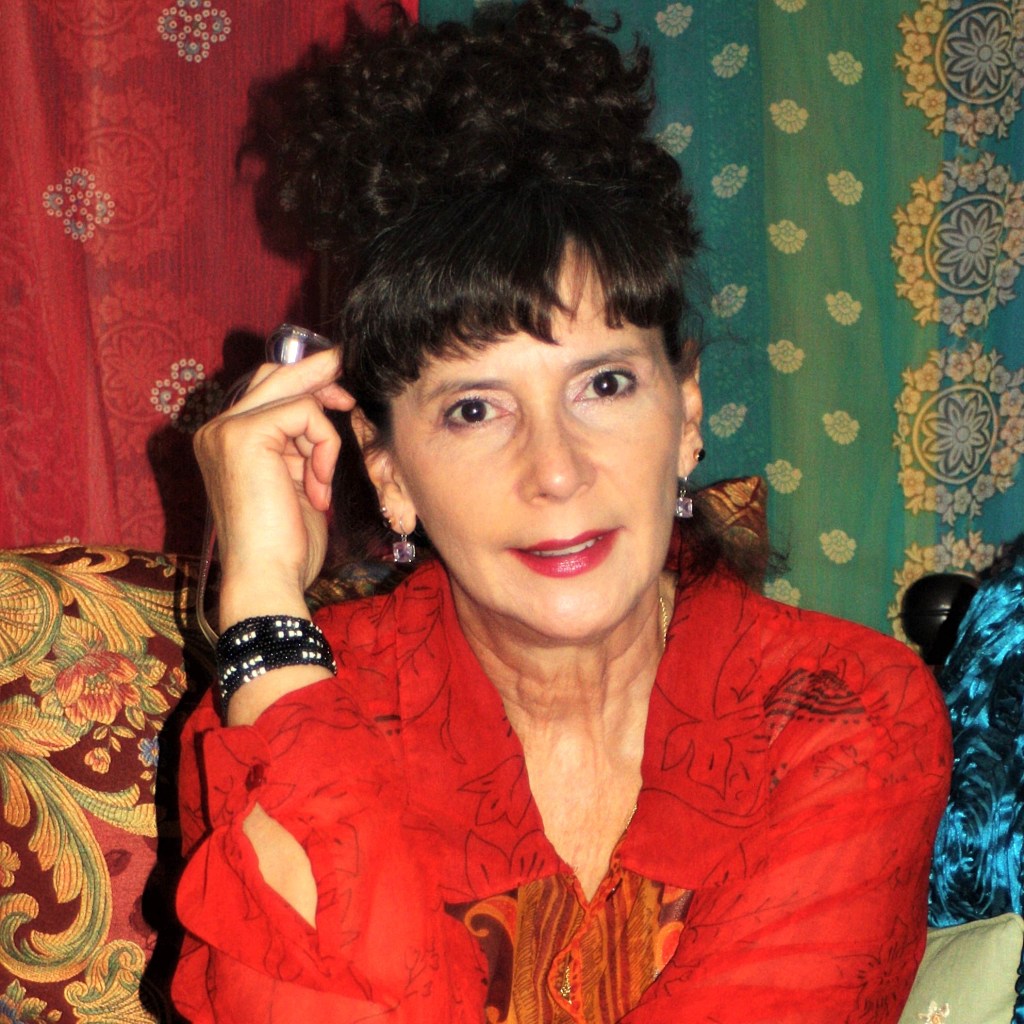
C. Evans Mylonas’ photographs have been exhibited by the Arizona Artists Guild and Arizona State University. She won Best Color Photography in the Winter 2016 issue of Cardinal Sins and was a 2015 first place winner of the Skeleton Coast Post photo contest. Her work can be seen in Aaduna, Cardinal Sins, Chaffey Review, Assisi: An Online Journal, and Skipping Stones Magazine. She was featured twice on the cover of Paradise Review, a literary journal published by Paradise Valley Community College.
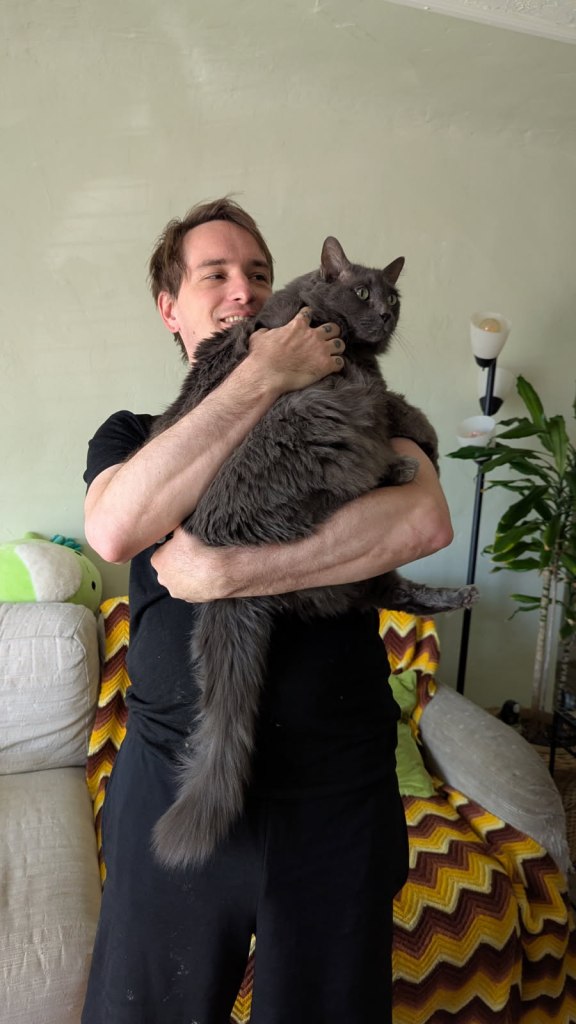
Cooper Lyon is a Phoenix native raised in its arts community from a young age. A lover of art of all sorts, he finds his own self-expression within the literary arts. He recently decided to attend Phoenix College to pursue a professional life, aiming to follow in his mother’s footsteps as an arts teacher.

